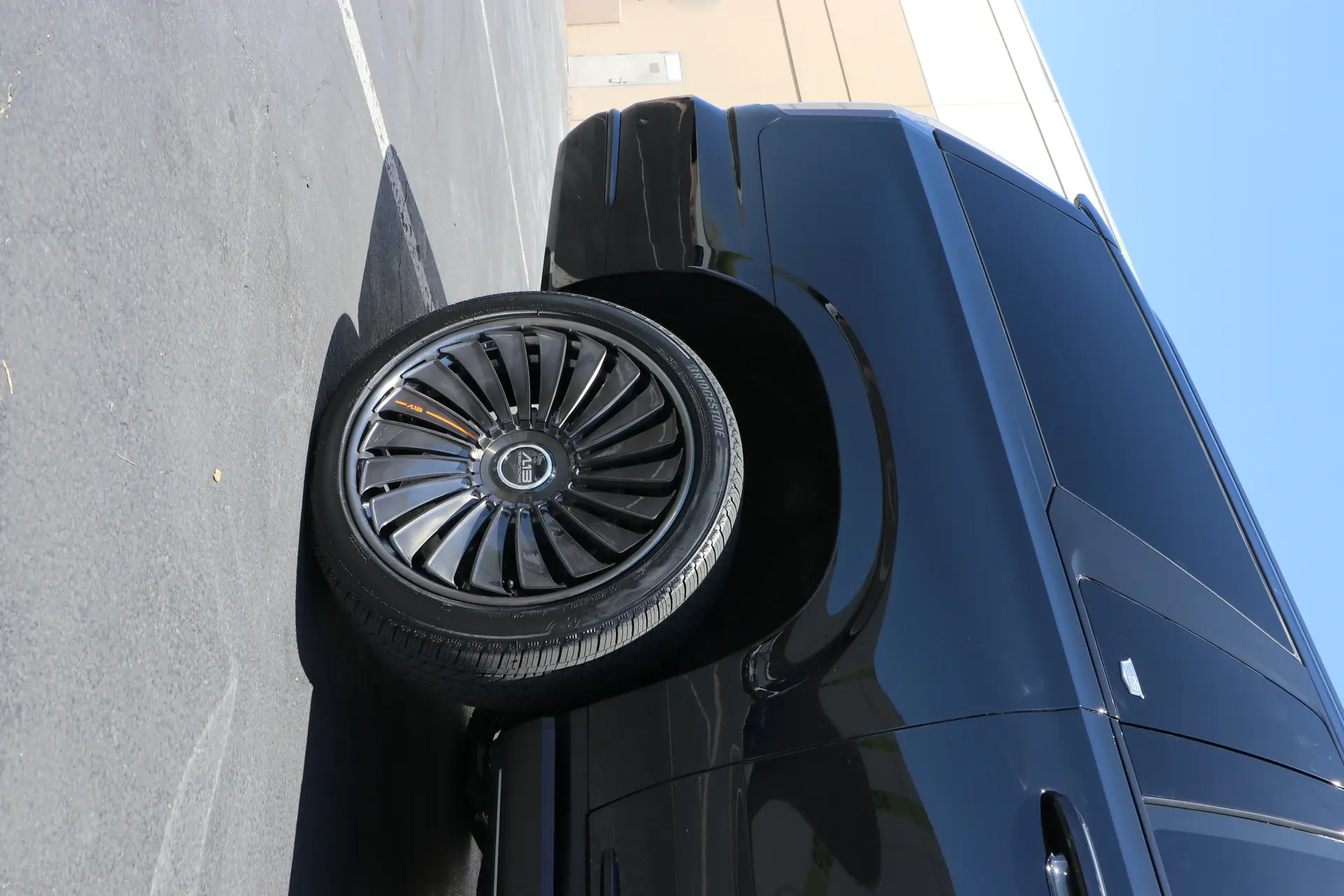
Three numbers decide whether a wheel actually fits your car: diameter, offset, and bolt pattern. Get any one of them wrong and you're either looking at rubbing tires, a wheel that won't bolt on, or a car that sits wrong. For Las Vegas drivers shopping for new wheels, everything below comes down to one question: will this actually fit?
What "Wheel Fitment" Actually Means
Fitment is whether a wheel physically works on your car, not just whether it looks good. That covers three separate things: the wheel bolts onto your hub correctly, it clears your brakes, suspension, and fenders without rubbing, and it sits where you actually want it to sit. A wheel can nail the first two and still look wrong sitting too far in or too far out, which is why fitment is as much a style decision as a mechanical one.
The Numbers That Matter: Diameter, Width & Offset
Diameter is the wheel's size in inches, measured across the face, and it has to match what your tire is built for. Width is how wide the wheel is, also in inches, and it directly limits which tire widths will actually seat properly. Offset is the one that trips people up: it's the distance in millimeters between the wheel's true centerline and the mounting surface that bolts to your hub. A positive offset means that mounting surface sits toward the outer face of the wheel, which pulls the whole wheel in toward your suspension. A negative offset (or a smaller positive number) pushes the mounting surface toward the inside, which shoves the wheel out toward the fender.
Here's where it gets real: these three numbers interact, they don't work in isolation. Say your car came with an 18x8 wheel at a +40 offset, and you're considering an 18x9 at +25. You've added an inch of width, and you've dropped the offset by 15mm. Both changes push the wheel outward, the width because there's simply more wheel, and the lower offset because the mounting point moved inward relative to the wheel face. Add them together and that new wheel sits noticeably further out than stock, both toward the fender lip and, to a lesser degree, toward the inner wheel well. That's a real fitment question, not just a spec on paper, which is exactly why we check clearance on the actual vehicle before ordering anything.
Bolt Pattern & Center Bore: Why These Can't Flex
Bolt pattern and center bore are the two specs with zero real-world wiggle room. Bolt pattern is the number of lug holes and the diameter of the circle they sit on (something like 5x114.3), and it has to match your hub exactly or the wheel simply won't bolt on. Center bore is the hole in the middle of the wheel that centers it on your hub. Offset and width have some genuine flexibility depending on your car and your goals, but bolt pattern and center bore are hard requirements. A wheel with the wrong bolt pattern isn't a fitment compromise, it's a wheel that doesn't go on your car.
How to Find Your Vehicle's Factory Fitment
Before shopping for anything new, confirm what you're actually running now:
Check the driver's door jamb sticker. Most factory tire and wheel specs are printed there.
Check your owner's manual. It lists the OEM wheel size, offset, and bolt pattern directly.
Check the back of an existing wheel. Size and offset are usually stamped right into the metal, often preceded by "ET" for offset.
What Happens When You Size Up
Going up a size, sometimes called sizing up, usually means a larger diameter wheel paired with a shorter-sidewall tire, which keeps the overall tire height close to stock while giving you a bigger wheel face and a larger tire contact patch. The upside is sharper steering feel and a more aggressive look. The tradeoff is a firmer ride, since a shorter sidewall absorbs less impact, and pricier tires, since low-profile sizes generally cost more to replace. None of that is a reason to avoid it, it's just what you're actually trading for the look and the feel.
Wheel Fitment Styles You'll See
You'll hear these terms constantly once you start looking at builds:
Flush — the wheel and tire line up evenly with the fender edge, neither tucked in nor poking out.
Poke — the wheel and tire extend slightly past the fender, common on trucks and muscle-car builds.
Tucked — the wheel sits recessed inside the fender, which is closer to how most factory setups look.
Stance — the wheel sits very close to the fender lip with the car set low, prioritizing a specific look over ride comfort.
Most of Lusso's customers land somewhere near flush or a mild poke. The more extreme stance builds involve real tradeoffs in ride quality and tire wear, which is worth knowing going in rather than discovering after the fact.
When You'll Need More Than New Wheels
Sometimes a wider or lower-offset wheel needs more than just the wheel itself to sit right. If a wider setup is rubbing on your fender liner or inner suspension components at full turn, that's a suspension or clearance issue, not a wheel problem, and no amount of wheel spacers will fix it safely. We handle these clearance checks as part of every custom wheel fitment, and we'll tell you plainly if your build calls for a suspension adjustment before we recommend a specific wheel.
Getting the Right Fitment for Your Vehicle
The specs above will get you close, but the only way to know a wheel actually fits your specific car is to check it against your specific car. Take a look at our full custom wheels services, or book a fitment check and we'll confirm everything before you spend a dollar on new wheels. For the full picture on styles, sizing, and what's popular right now, see our complete custom wheels guide. Deciding between forged options specifically? Our forged wheel brand comparison breaks that down further.
Frequently Asked Questions
How do I figure out what wheel fitment I need?
Start with your factory spec from the door jamb sticker or owner's manual, decide on the look you're going for (flush, mild poke, and so on), then confirm the new wheel's bolt pattern and center bore match your hub exactly before checking offset and width against your fender and suspension clearance.
What is the 3% rule for tires?
It's the guideline that a replacement tire's overall diameter should stay within about 3% of your factory tire's diameter, since your speedometer, ABS, and traction control are all calibrated around that original wheel-speed signal. Going noticeably beyond it can throw off your speedometer reading and trigger warning lights that have nothing to do with an actual mechanical problem.
Is a wheel fitment calculator or tool worth using?
A good calculator can be a useful starting point for narrowing down options, but we don't have one built into our site yet, though it's something we're working on. Until then, the most reliable option is bringing your vehicle in for a real fitment check rather than relying on specs alone.
Will bigger wheels mess with my speedometer or handling?
Only if the overall tire diameter changes significantly, which ties directly back to the 3% rule above. A properly sized setup that keeps overall diameter close to stock won't meaningfully affect your speedometer or handling.
Can I run wider wheels without changing my suspension?
Often yes, but it depends entirely on offset and fender clearance for your specific vehicle. This is exactly the kind of thing covered in the "When You'll Need More Than New Wheels" section above, and it's why we check clearance in person rather than guessing from specs alone.