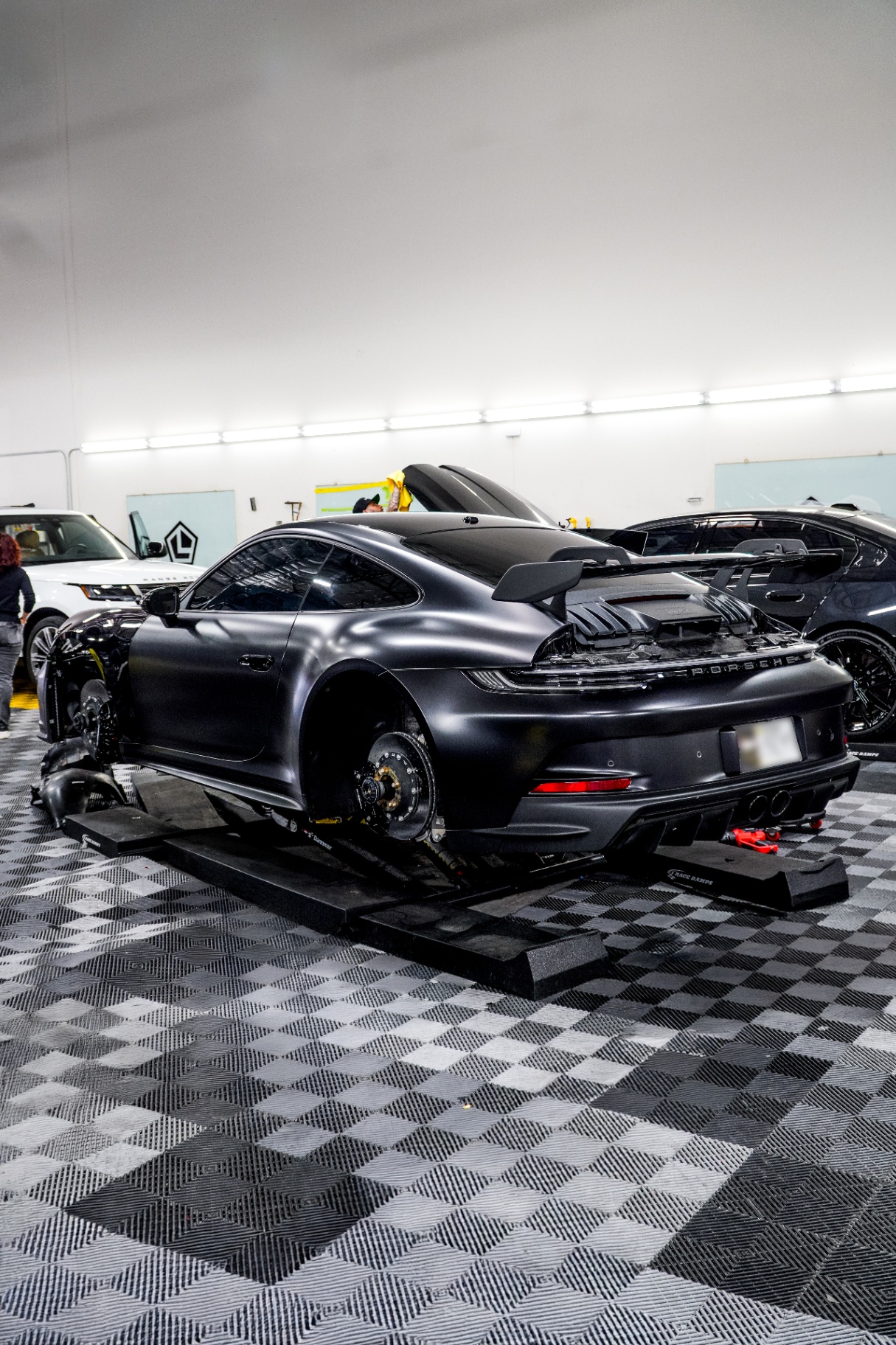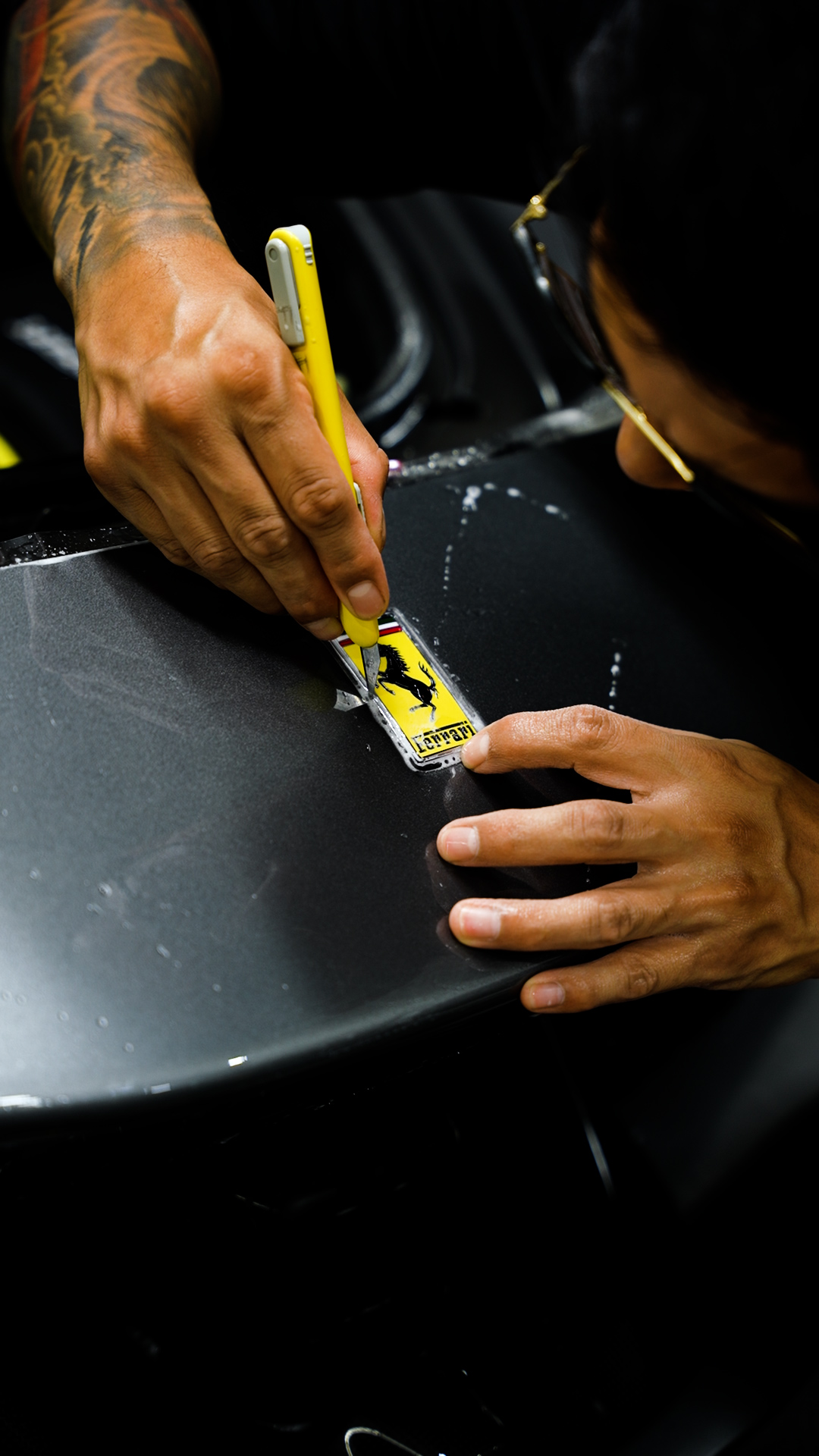
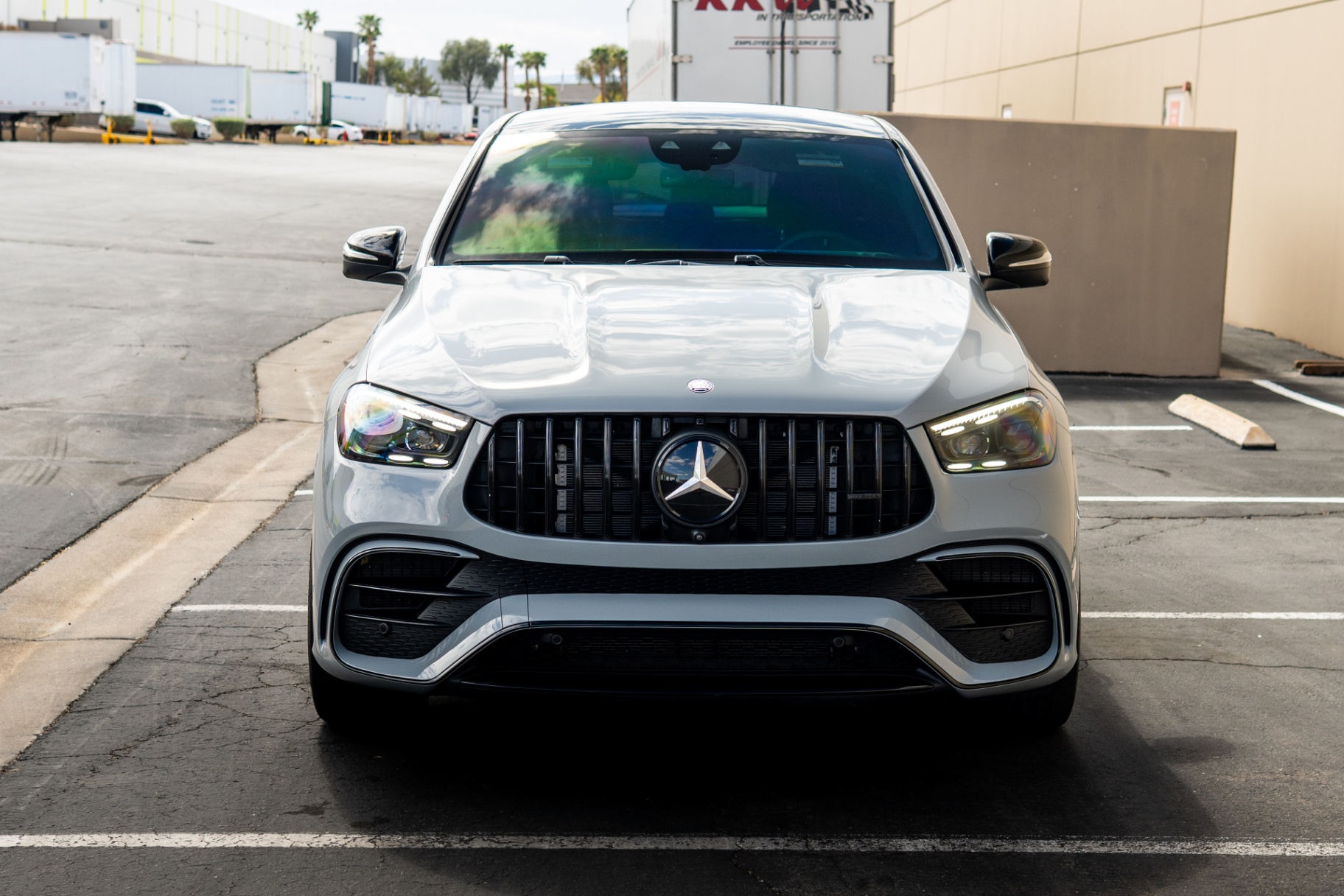
PPF is a physical barrier that stops rock chips and impacts. Ceramic coating is a chemical layer that resists UV, staining, and water spotting, and makes washing easier. They solve different problems, which is why calling this a "versus" question is a little misleading. Most owners who want full protection in Las Vegas use both.
PPF vs. Ceramic Coating at a Glance
| What You're Worried About | PPF | Ceramic Coating |
|---|---|---|
| Highway stone chips | Takes the hit instead of the paint | No meaningful protection |
| Swirls from washing | Self-healing film recovers most | Harder surface resists some |
| Bug acid and bird damage | Physical barrier | Easier to remove before it etches |
| Hard water spotting | Reduced | Strongly reduced |
| UV fade | On covered panels only | Across the whole car |
| Where it goes | Impact panels or full body | Every painted surface |
The usual result of that table is film across the front end, with a coating over the entire car, including on top of the film itself.
What Does PPF Actually Protect Against?
PPF stops rock chips, road debris, and physical impacts before they reach your clear coat. Its self-healing top layer also helps light swirls and wash marring disappear with heat, which is a real bonus but not its main job. What PPF doesn't do much for on its own is UV or chemical resistance. It's a physical shield, not a surface treatment.
What Does Ceramic Coating Actually Protect Against?
Ceramic coating resists UV fade, chemical staining, and hard water spotting, and its hydrophobic surface makes water and contaminants release instead of sticking, which is why washing takes less time and effort. What ceramic coating doesn't do is stop a rock chip or a deep scratch. No coating, regardless of price or brand, physically absorbs an impact the way film does.
Which One Stops Rock Chips?
PPF, not ceramic coating. Ceramic coating is a thin chemical layer, not a physical barrier, so a rock hitting your hood at highway speed chips the paint underneath exactly the same as it would on uncoated paint. If rock chips are your actual concern, film is the product built to solve it.
Which One Makes Washing Easier?
Ceramic coating. Its entire hydrophobic mechanism exists to make water, dust, and contaminants slide off instead of bonding to the surface, which is a different job than PPF's impact absorption. PPF helps some through its self-healing surface, but it isn't built around washing the way coating is.
PPF vs. Ceramic Coating: Cost
PPF generally costs more than ceramic coating because of the material, patterning, and installation labor involved in wrapping panels precisely. For real numbers on each, see our PPF cost breakdown and ceramic coating cost breakdown for Las Vegas.
Should You Get PPF or Ceramic Coating First?
PPF first, then ceramic coating over the film and the rest of the paint. Film needs to go onto properly corrected paint, since anything left underneath gets locked in permanently once it's applied. Coating applied afterward protects the film itself from UV degradation and keeps the whole car's surface behaving the same way, rather than having film and bare paint react differently to the same wash.
Can You Combine PPF and Ceramic Coating?
Yes, and it's the strongest approach for most owners who want real protection. Film handles the impact zones, typically the front bumper, hood, and mirrors, while coating goes over the entire vehicle including on top of the installed film. The result is one consistent, easy-to-wash surface that has both impact protection where it matters most and chemical protection everywhere else.
PPF vs. Ceramic Coating for Las Vegas Drivers
Road debris on I-15 and the 215 is the leading cause of the paint damage we actually see at our Henderson shop, and that's a PPF problem, not a coating problem. No amount of ceramic coating stops a rock kicked up by a semi at freeway speed. At the same time, Nevada's UV load and desert dust make the case for ceramic coating stronger here than in a milder climate. Unprotected paint fades and oxidizes faster under this much sun, and hard water spotting from sprinklers etches into paint that isn't shedding water efficiently. Put together, most Las Vegas owners who want to actually protect a car long term choose both: film on the front end where the real impact risk lives, and coating over the whole vehicle for everything else the desert throws at it.
Which Should You Choose?
If you're budget-conscious and mainly want easier washing and better gloss, ceramic coating alone covers that. If you're a frequent highway driver with a new or high-value car and want to avoid a respray after a rock chip, PPF is the priority. If you want the strongest possible protection and plan to keep the car for years, both together is the real answer.
Getting the Right Combination for Your Car
The right combination depends on how you actually drive the car and what it's worth to you, which isn't something a generic article can answer for your specific vehicle. An in-person conversation is the fastest way to land on the right coverage and film choice.
Book a consultation or call (702) 342-9400 to talk through what your car actually needs.
Frequently Asked Questions
Is PPF or ceramic coating better?
Neither is better in an absolute sense, they protect against different things. PPF stops physical impacts like rock chips. Ceramic coating resists UV, chemicals, and water spotting, and makes washing easier. Most owners who want full protection use both.
Should I get PPF or ceramic coating first?
PPF first, then ceramic coating over the film and the rest of the paint. Film needs to go onto properly corrected paint, and coating applied afterward protects the film itself while keeping the whole car's surface behaving the same way.
Can ceramic coating stop rock chips?
No. Ceramic coating is a thin chemical layer, not a physical barrier, so it provides no meaningful protection against a highway stone chip. PPF is the product built to absorb that kind of impact.
Can you put ceramic coating over PPF?
Yes, and it's a common combination. Coating over installed film protects the film from UV degradation and makes it easier to keep clean, while the film underneath keeps doing its job of absorbing impacts.
Do I need both PPF and ceramic coating?
Not necessarily, it depends on what you're trying to solve. If rock chips are your main concern, PPF alone covers that. If easier washing and gloss are the priority, ceramic coating alone may be enough. For the strongest overall protection, most owners use both.